

In Madagascar, the strategic shift toward the East is no longer a matter of diplomatic fine-tuning, but rather the sign of a profound reconfiguration of the country’s alliances and security priorities. Long voiced concerns in Western capitals are now taking concrete shape: since coming to power in October 2025, Colonel Michaël Randrianirina—who emerged as the country’s new strongman following the fall of Andry Rajoelina—has openly and deliberately expressed his determination to strengthen ties with Russia, fully aware of the risk this poses to Madagascar’s long-standing partnerships with the West. This orientation represents a strategic rupture rather than a mere tactical adjustment.
MILITARY COOPERATION RESEMBLING STRATEGIC PARTNERSHIP
On 20 and 21 December 2025, the reception in Antananarivo of a high-level Russian delegation unfolded in a particularly revealing context: the discreet yet significant arrival of a Russian military convoy consisting of 43 containers. These reportedly contained precision weapons, anti-tank rocket launchers, and equipment dedicated to presidential protection. According to sources cited by Bloomberg, this delivery forms part of a rapid and structural reinforcement of Madagascar’s military capabilities, carried out under the direct supervision of Russian experts—suggesting a swift upgrade of the country’s security apparatus.
Siteny Randrianasoloniaiko, President of the National Assembly and a political figure clearly aligned with Moscow, confirmed the visit. He specified that the delegation was led by General Andrei Averianov, deputy head of Russian military intelligence and commander of the Africa Corps. The delegation reportedly promised enhanced logistical support and an expansion of training programs for the Malagasy armed forces. However, the complete absence of visual evidence confirming General Averianov’s presence has fueled speculation regarding the true nature of his mission, particularly amid persistent rumors of possible Russian involvement in an incident in the Mediterranean in mid-December. This informational ambiguity is consistent with the concealment strategies often associated with Russian operations abroad.
DIPLOMACY FIRMLY ORIENTED TOWARD THE EAST
From the outset of his tenure, Colonel Randrianirina has sent a series of unmistakable signals to Moscow: choosing Sputnik for his first interview, meeting swiftly with the Russian ambassador, and granting an interview to RT. In early November, an official visit to Moscow by the President of the National Assembly resulted in significant agreements, notably concerning fuel supplies to Jirama, the national energy company, through Russian firms. These arrangements reflect a deliberate effort to link military security with energy security. In mid-December, a cultural performance organized in Antananarivo by the Russian armed forces further reinforced this influence strategy, blending soft power, military symbolism, and political presence.
For Lou Osborn, a researcher with the collective Inpact–All Eyes on Wagner, this approach fits a now well-established pattern previously observed in Burkina Faso and Niger. According to her, Russia’s strategy combines security assistance, military dependency, and information warfare, with the aim of delegitimizing previous regimes and presenting Moscow as a credible alternative partner to the West.
SCATTERED ISLANDS: MAJOR BUT LITTLE-KNOWN GEOPOLITICAL STAKE
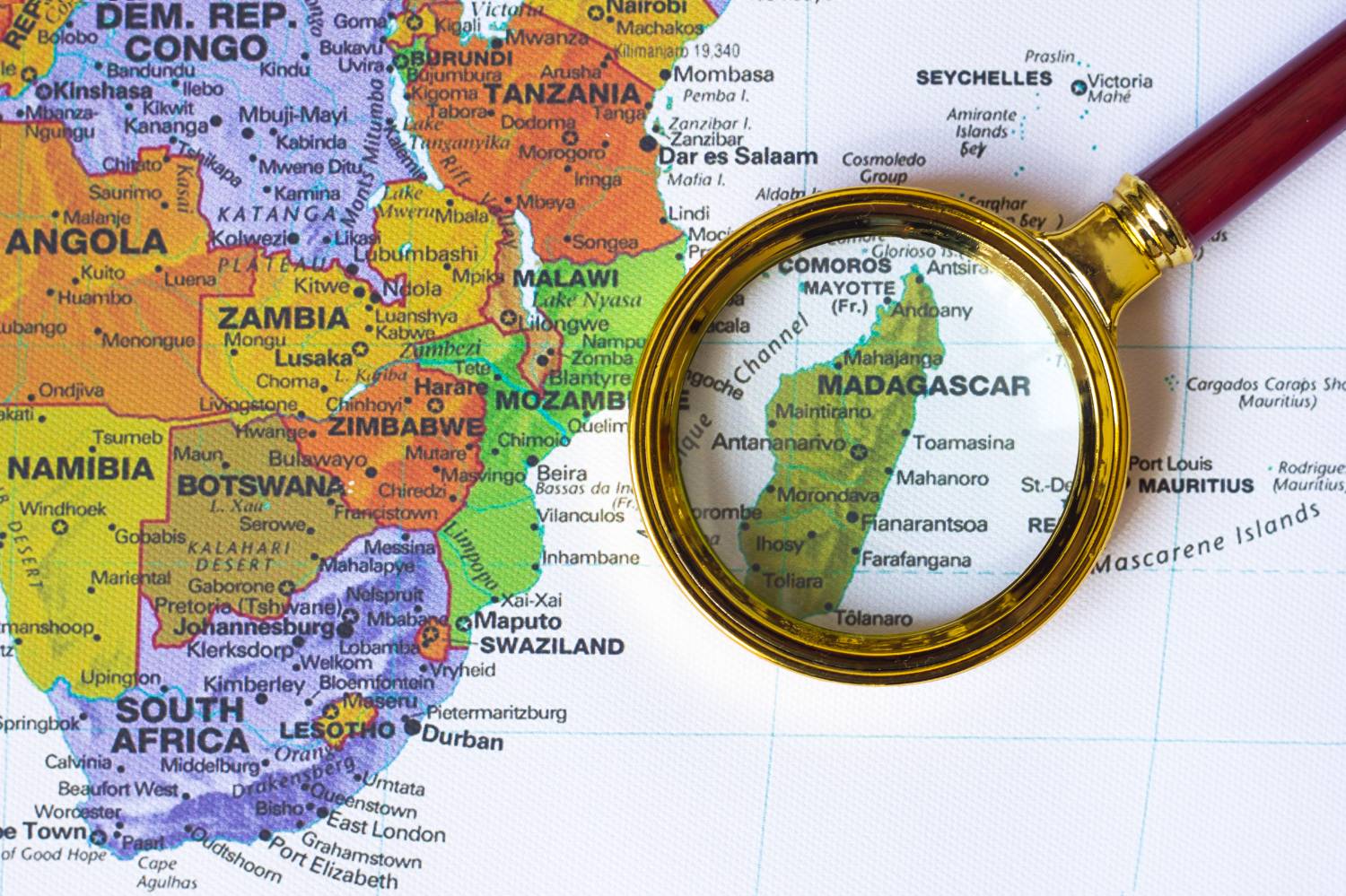
The Îles Éparses (Scattered Islands) refer to a group of small islets and atolls, most of them uninhabited, located in the Mozambique Channel between Madagascar and the eastern coast of Africa. They include Europa, Juan de Nova, the Glorioso Islands, Bassas da India, and Tromelin. Despite their minimal land area, their strategic importance far outweighs their physical size.
Administered by France as part of the French Southern and Antarctic Lands, these islands are the subject of a longstanding claim by Madagascar, which argues that they should have been returned at the time of independence in 1960. This unresolved dispute remains one of the most sensitive post-colonial issues between Antananarivo and Paris and could be instrumentalized amid a broader realignment of alliances.
The core issue is maritime. Under international law, each island generates a vast Exclusive Economic Zone, granting control over hundreds of thousands of square kilometers of maritime space. These waters are rich in fishing resources and are believed to contain significant offshore gas and hydrocarbon reserves. They also provide a major strategic advantage for monitoring key maritime routes used by global trade and energy flows.
From a security standpoint, the Scattered Islands lie at the heart of one of the most strategic and closely monitored maritime corridors in the Indian Ocean. France maintains a limited but permanent military presence there to assert sovereignty, conduct maritime surveillance, combat illegal fishing, and help manage transnational threats in a region increasingly shaped by piracy and intensifying great-power rivalry.
For Madagascar, regaining control of the Scattered Islands represents simultaneously an issue of national sovereignty, post-colonial justice, and a potentially transformative economic opportunity. Control over the associated maritime zones could fundamentally reshape the country’s energy prospects and enhance its regional strategic weight. For external actors—France, the United States, China, and now Russia—these territories constitute key footholds in an Indian Ocean that has become a central arena of global geopolitical competition.
MULTI-DIRECTIONAL POLICY WITH CALCULATED RISKS
The transitional government maintains that it seeks to keep all diplomatic options open, while prioritizing agreements described as mutually beneficial. Political analyst Serge Zafimahova sees this approach as echoing the diversification strategy pursued in the 1970s: Madagascar aims to broaden its range of partners to reduce dependency, even at the cost of irritating its Western allies. In his view, the urgent need to modernize the armed forces and secure long-term energy supplies is the primary driver behind the rapprochement with Moscow.
In an Indian Ocean that has become one of the principal theaters of great-power rivalry, Madagascar is gradually asserting itself as a pivotal actor—not through intrinsic power, but through its geographic position, its potential resources, and its ability to leverage competition among external partners. The rapprochement with Russia offers the transitional regime short-term security and political leverage, but it also exposes the country to new forms of strategic dependency and a potential hardening of relations with the West. The real uncertainty therefore lies not in whether the strategic shift is occurring, but in Madagascar’s ability to manage its consequences, preserve its decision-making autonomy, and prevent this realignment from turning the island into a mere arena for indirect confrontation among competing powers.
*Author is former member of the UN senior staff