

For more than a decade and a half, Syria exerted direct control over Lebanon, from the end of the civil war in 1990 until the military withdrawal of 2005. That period left behind institutional structures that have become toxic, symbols of an era that is over but still painful. Among them, the Higher Council for Syrian-Lebanese Cooperation embodies, in Beirut’s eyes, the bureaucratic survival of a tutelage that many hope is finally closed. Although the new Syrian authorities acknowledge the futility of this body, they still hesitate to pronounce its formal dissolution, whereas Lebanon demands a strong political gesture, one of high symbolic and liberating significance.
More than a year after the fall of Bashar al-Assad, on December 8, 2024, the state of bilateral relations reflects a persistent unease: taboos are beginning to fall, but institutional and memorial locks remain resistant. For the Lebanese government, dialogue with Damascus is no longer an option but a strategic necessity, almost vital, for the two countries remain interdependent economically, securely, and humanly.
After more than fifty years of troubled relations under the rule of the al-Assads, Beirut wants to believe in a historic break, a page finally turned. Tarek Mitri, deputy prime minister in charge of the Syrian file, speaks of a possible new beginning founded on sovereign equality and mutual respect. This wager rests on the idea that post-Assad Syria, weakened and rebuilding, has neither the means nor the will to resume a policy of direct interference, even if the future of the transitional regime remains uncertain and a source of concern.
Exchanges with the circle around Ahmed al-Charaa, interim Syrian president, are described as cordial. The new leaders in Damascus display a desire for transparency, while maintaining an overt hostility toward Hezbollah, whose military engagement alongside the fallen regime between 2012 and 2024 remains an open wound, associated with some of the bloodiest episodes of the Syrian war.
Despite positive signals, the obstacles are numerous and deep. It is less a matter of reconciling two governments than of disentangling decades of suspicion, trauma, and indirect rivalries. The reciprocal visits of Lebanese Prime Minister Nawaf Salam to Damascus and of the Syrian foreign minister to Beirut in 2025 illustrated a diplomacy guided more by pragmatism than by enthusiasm, where every step forward is measured and calculated.
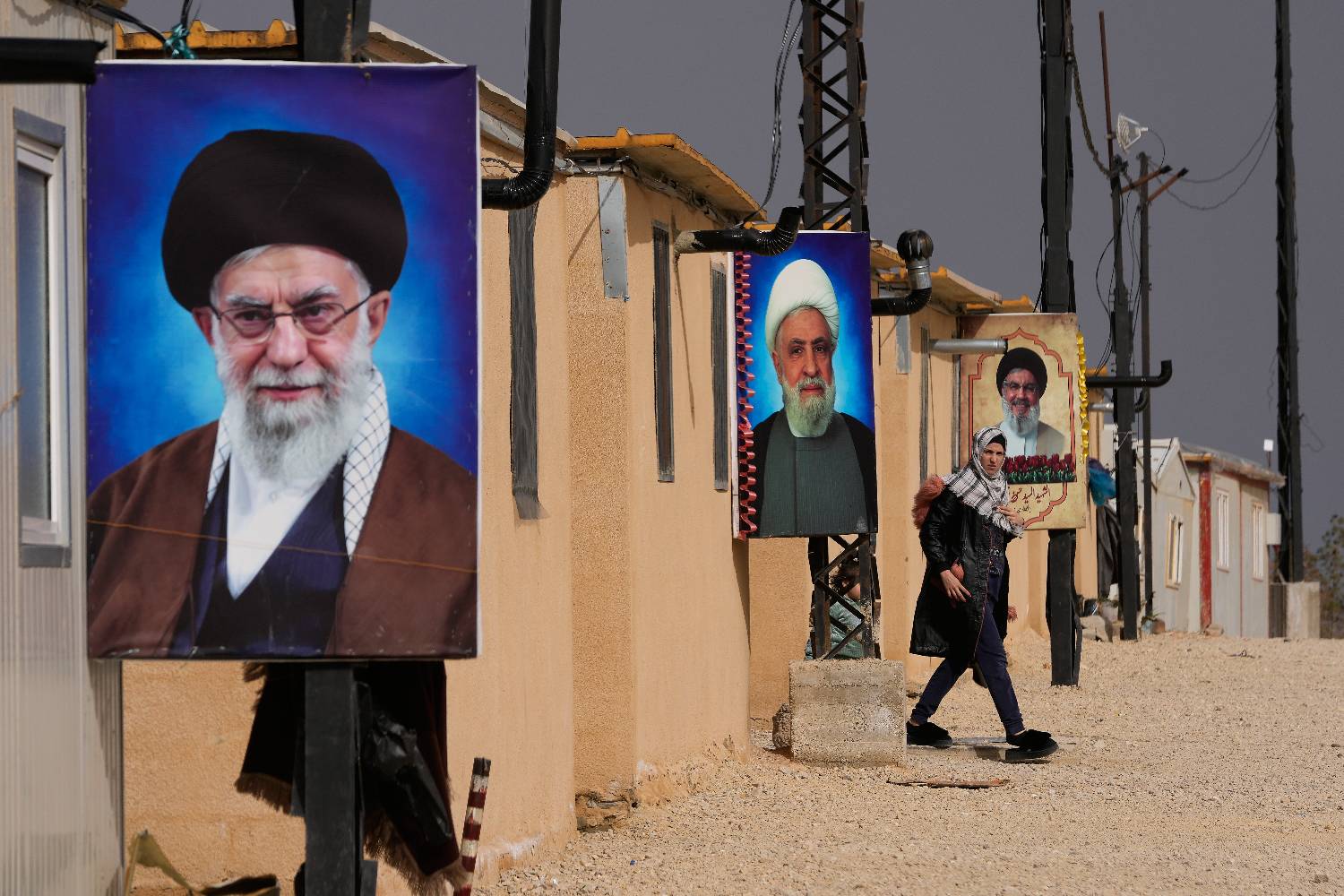
The two countries are undergoing profound transitions at the same time, but along opposite trajectories. In Syria, Ahmed al-Charaa concentrates power around a core drawn from the former rebel enclave of Idlib, in a country that must be rebuilt almost entirely, both physically and socially. In Lebanon, a dual leadership took shape in early 2025, driven by the spectacular weakening of Hezbollah after the assassination of Hassan Nasrallah in September 2024 during a major Israeli offensive. That event marked a geopolitical turning point: deprived of its Syrian strategic depth, Hezbollah saw its influence crumble, accelerating the disintegration of the pro-Iranian axis in the Levant.
In this new balance, Saudi Arabia has regained a central role in Beirut alongside the United States, while Iranian influence, though still present, has markedly diminished. Paradoxically, Syria is now more courted on the international stage than Lebanon, long considered the darling of Western chancelleries but today weakened by internal divisions.
Within Lebanon, the fall of the Assad regime has awakened old communal fractures that were never truly healed. While some Sunni neighborhoods celebrated the event as liberation, other groups—Shiites, Christians, or Druze—fear the advent of a Syrian power dominated by a Sunni majority with Islamist overtones. The violence that occurred in Alawite and Druze regions in 2025 only fed those fears, reminding all that Lebanon’s stability remains dependent on regional dynamics.
Faced with these tensions, Walid Jumblatt has distinguished himself by advocating direct dialogue with Damascus, rejecting the logic of the “minorities’ alliance.” His approach aims to prevent Lebanon from once again being held hostage by regional calculations based on fear and exclusion, even if this line remains contested within his own community.
On the ground, cooperation is advancing nonetheless, timidly but concretely. Security coordination along the border has strengthened, helping to reduce trafficking and avoid certain escalations. The gradual return of Syrian refugees is one of the rare dossiers where interests clearly converge: nearly a third of displaced persons present in Lebanon before 2024 have already returned to Syria with the support of the United Nations.
Other issues remain explosive, notably that of Syrian Islamist detainees incarcerated in Lebanon. Damascus makes this a precondition for any major progress, while Beirut moves cautiously, aware of the sensitivity of public opinion and of the symbolic role of the army as guarantor of national sovereignty.
The question of officially demarcating the border also remains central. Clarifying the line would mean, for Syria, recognizing Lebanese sovereignty without ambiguity, a step that former regimes always refused to take. Discussions have begun, but without a precise timetable, as if each side fears making the first move.
Economically, Beirut hopes to benefit indirectly from Syrian reconstruction and the lifting of international sanctions. But this ambition presupposes full normalization of cross-border exchanges, still hindered by reciprocal punitive measures and entrenched mistrust.
In this shifting context, certain American statements have revived old traumas, hinting at the specter of a new regional tutelage. Even if Damascus denies any expansionist intention, mistrust remains strong, all the more so as sectarian violence in Syria continues to spill over into Lebanon.
In the background, regional uncertainties weigh heavily: the risk of escalation between Washington and Tehran, the continuation of Israeli strikes in Lebanon and Syria, the reshuffling of alliances. In this unstable environment, Beirut and Damascus move forward tentatively, aware that their futures are linked but still unable to define the contours of a calm and lasting relationship.
Learning to speak to one another after so many years of domination, war, and suspicion is the discreet but immense challenge facing the two neighbors. Every word, every gesture is laden with history. The road to normalization will be long and strewn with obstacles, but perhaps necessary to prevent the past from continuing to dictate the future.
*Author is a former member of the UN seniot staff