

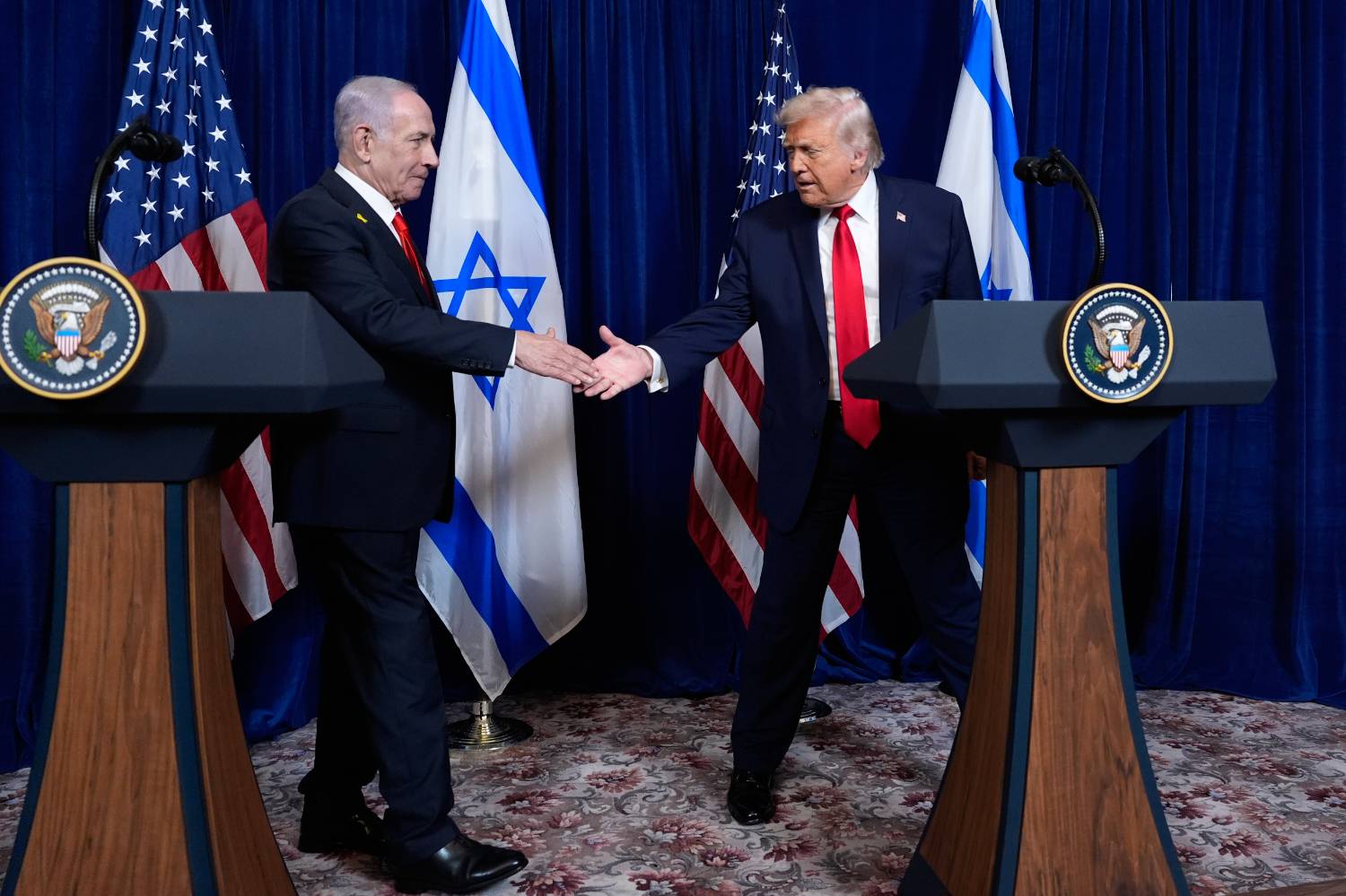
However, behind this display of unity, several issues continue to worry Israel. The disarmament of Hamas before any Phase 2 of the Gaza plan remains a major point of contention with Washington, which is considering including an international force with the participation of Turkey and Qatar. Israel criticizes the ideological, financial, and political links of these two countries with Hamas and fears a strategic encirclement, particularly by Turkey, which indirectly supports the Islamist movement and seeks to expand its influence to the north and south of Gaza. This situation illustrates the logic of Israeli Revisionist Zionism, which emphasizes maximal security and the preservation of the state.
The American approach increasingly appears, from Israel’s perspective, transactional and pragmatic, moving away from the historic values that have underpinned the alliance. Washington is relying on Qatar and Turkey as levers to control Hamas and oversee the reconstruction of Gaza, fueling Israeli distrust. Tensions are further exacerbated by U.S. support for certain regional partners, such as Ahmed al-Charaa in Syria, seen by Israel as a “jihadist in a suit,” and by its stance toward Qatar, which has caused diplomatic friction, including incidents requiring Netanyahu to apologize to the Emir.
Turkey’s growing regional influence, embodied by Erdogan, is a particular concern for Israel. The Turkish strategy is viewed as a double encirclement — north and south — and as an effort to maintain Hamas in power in Gaza while extending influence in Syria and the Horn of Africa. This dynamic reinforces the perception of a Turkish imperialism with clear ideological and strategic contours, directly conflicting with Israel’s security objectives.
Domestically in the U.S., Israeli concerns are also fueled by the perception of a pragmatic but unpredictable Trump. While the president shows exceptional closeness to Israel, divergences over the sequencing of the Gaza plan, regional alliances, and Iran policy suggest that Washington could adopt a more transactional than strategic approach, leaving Israel facing difficult choices.
At the heart of these dynamics lies Israeli Revisionist Zionism.
Revisionist Zionism represents one of the most formative and divisive ideological currents in Israeli political history. Founded in the 1920s by Vladimir Jabotinsky, it differs from the dominant labor Zionism of the era through its assertive nationalist vision, maximalist territorial conception, and fundamentally conflictual reading of relations with the Arab world. For Jabotinsky, the creation and survival of a Jewish state could not rely on compromise or regional integration, but on strength, deterrence, and what he called the Iron Wall — a military superiority rendering any Arab challenge futile.
This doctrine was not purely military. It carried a coherent worldview based on the primacy of the nation, deep skepticism toward international institutions, and a rejection of universalist illusions. Revisionist Zionism held that only full, sovereign Jewish control over the entirety of historic Israel could guarantee the security of the Jewish people. This thinking continues to permeate much of the Israeli right and forms the ideological foundation of Likud.
The intellectual lineage between Jabotinsky and the Netanyahu family is central to understanding this continuity. Benzion Netanyahu, father of Benjamin Netanyahu, was not only a major Revisionist Zionist intellectual but also a close collaborator of Jabotinsky. He worked alongside him in the United States during the 1940s, sharing and promoting a combative Zionism, uncompromising on territorial issues and deeply skeptical of any concessions.
Benzion Netanyahu viewed Jewish history as a succession of existential threats and considered anti-Semitism a near-constant in non-Jewish societies. This tragic reading of history nurtured a central conviction: any political or military weakness would be interpreted as an invitation to violence. This worldview profoundly influenced his son, who has often claimed the intellectual inheritance of his father and, indirectly, of Jabotinsky.
Beyond situational circumstances and tactical calculations, Benjamin Netanyahu’s policies are embedded in an old, structured, and coherent ideological tradition. They rest on the principle that security takes precedence over all other considerations, that power dynamics outweigh international norms, and that national survival justifies a posture of permanent firmness. Understanding this ideological lineage helps move beyond purely opportunistic or personal readings of power and sheds light on Israeli strategic choices in their historical depth. This fundamental aspect underpins Israel’s prioritization of security and the disarmament of Hamas, its distrust of regional partners such as Qatar and Turkey, and its refusal to accept externally imposed solutions. The geopolitical complexity is further heightened by American calculations, which mix strategic interests, regional influence, and transactional imperatives, leaving Israel attentive to every signal from Washington and wary of potential shifts in Trump’s approach during key phases.
*Author is former member of the UN senior staff