

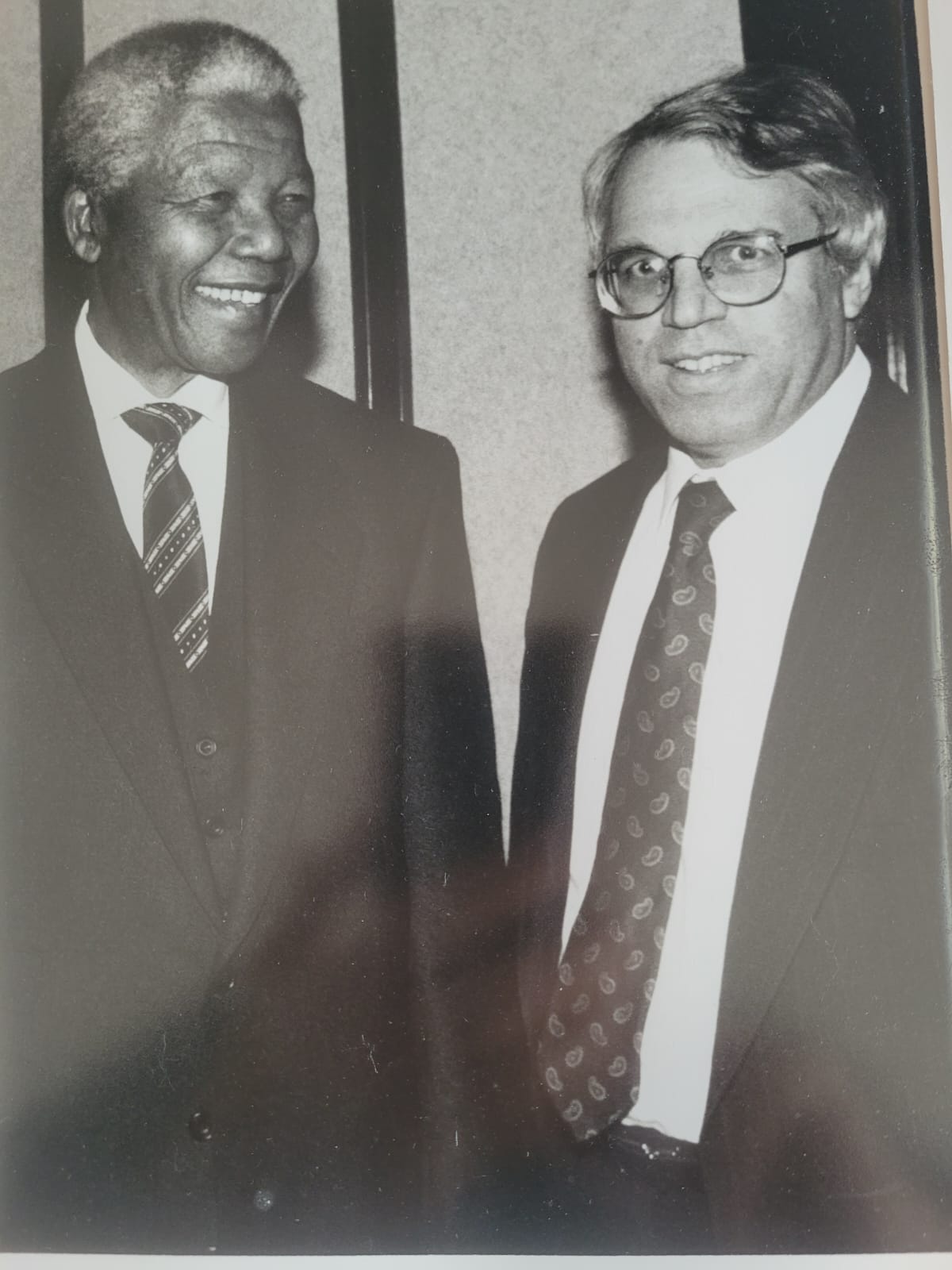
Dr. Alon Liel, after 31 years of a diplomatic career pursuing peace, deplores the nationalistic-messianic trend that amplified since 20 years ago, still believes in peace, which he thinks requires the elimination of the concept of Israeli Jewish superiority.
What is the content of the letter of June 2026 signed by prominent Israelis addressed to the Israeli Government?
I signed so many letters, we sign letters about once a month now. In the past few months, the letters concerned the West Bank. The June letter opposes settler violence in the West Bank. Until recently, most of Israel’s problems internationally were linked to Gaza because of the enormous scope of the killings, destruction, hunger, dislocation of people, namely the disproportionate response to the October 7, 2023 attack. As regards Gaza, many Israelis will argue that Israel was attacked and humiliated to justify the response. The situation in the West Bank is different, it stems from the desire of settlers to remove Palestinians from their land, it is a policy of ethnic cleansing. Some contend that the violence is perpetrated by individuals, civilians, not the Government. However, it has been going on for a very long time now, the Government hasn’t done anything to stop it. It is not just violence against Palestinians, it includes foreigners, recently they attacked a delegation of European Union diplomats and an American journalist visiting the West Bank. This is a huge embarrassment for people like me, it causes us a lot of worries as Israelis and as Jews. What does it mean to be an Israeli and a Jew? It is impossible for us tolerate this kind of violence as Israelis -and as Jews. If this is Jewish behaviour then I am not Jewish. If these were sporadic incidents, you could argue that there are lunatics and idiots in every country, but this behaviour is carried out with the Government tolerating and enabling it. For those of us who worked for the Israeli Government and military, who have pursued peace, this prevents peace. But even for those who think that there should not be a Palestinian state and who want Israel to control everything, the settler violence in the West Bank is inhumane and immoral, it is neither Jewish nor Israeli.
The letter threatens legal action against the Government if it does not take measures to stop the settler violence. Have any steps been taken in that direction?
It is in the pipeline. It is a complicated procedure because each one of us has to sign the petition to the Supreme Court in front of a lawyer. We are 100 signatories, among whom most senior military, justice and intelligence officials, diplomats as well as laureate winners. The 98 page document will be submitted to the Court after the 27 October elections because we do not want it to be misused by the rival parties. We are demanding legal procedures against the violent settlers and anyone who backs them, be they religious leaders, the municipalities, politicians, the police, the secret services. So anyone who is supporting and enabling the violence and all those who are carrying it out.
Who initiated this letter?
The initiators of the letter are a group of Israeli individuals who have been going to the West Bank daily for the past year to protect Palestinian civilians victims of the violence. They have been monitoring and documenting what is going on which they witness with their own eyes, they have ample evidence, documents, photos. I was not among the initiators though.
Who are the violent settlers?
I will do my best to answer, because I have not met any of them and I hope I will not meet any of them. I was a diplomat for 31 years. In the second half of the 70s and in the 80s when I was a junior diplomat, we sensed that the settlements would backfire. According to the Geneva Conventions, a military presence in the Palestinian territories was not illegal. However, the permanent settlement of civilians belonging to the country of the occupier force is. Senior diplomats warned the Government that we were in violation of the Geneva Conventions, to which Israel is a signatory. But politicians, including the Labor Party, enabled the permanent move of Israeli civilians into Palestinian territories. Israeli legal experts made it known that it was illegal. So most adults who moved there knew that it was illegal and controversial internationally, but also within Israel. With time that population in the West Bank grew to some 600,000. This population became politically powerful and part of the country’s elite. Public opinion was manipulated to present them as Israel’s new pioneers. Israelis who adhere to the nationalistic, religious, messianic trend, forever fighting for Israel’s existence, supported the settlements, they became the highlight of Zionism and Judaism. The violent settlers are in their teens and early 20s, joining them are some youth from Israel proper, they believe they are “saving” Israel. They do so by destroying Arab villages and expelling Palestinians from their land. The Israeli leadership that believes that the West Bank should be Israeli is benefiting politically from the depopulation of Palestinians from areas of the West Bank. Even if they know it is damaging to Israel internationally, they do not stand against the settlers and their backers, rather they are quietly backing them. These youth, now maybe in the thousands, are difficult to control. The army would be required, it is very aggressive and effective in controlling Arab violence, but soft when it comes to Israeli Jewish violence. The Government has criticised these gangsters publicly, but is financing the settlements under the table, in addition to subsidizing their utilities, thereby supporting these wild racist militia.
The settlers come from the nationalistic messianic political camp that Netanyahu has built in the past 20 years. This coalition is also supported by people in Israel who were taught in school to hate Arabs and that Jews are superior to them. It is the camp of Jewish-Israeli superiority. I was born in Israel, I am not young, my family, friends and I never saw ourselves as superior to Arabs, to Palestinians. But a couple of decades back, starting with Rabbi Kahane and fast forward to Ben Gvir and Smotrich, the Israeli political system has developed a Jewish superiority bias. The result being that these settler youths believe they have a superiority given to them by God, that they have a religious right to expel Palestinians.
Why do Israelis refuse to accept that establishing a Palestinian state is the best response to ensuring their security?
I served in the Israeli Government since the mid-70s and into the 90s. We have always supported the two-state solution, we aimed for peace with the Palestinians. I was responsible for the Hasbara, namely Israeli diplomacy, I was also the Spokesperson for the Ministry of Foreign Affairs, as well as its Director General. We wanted to trade the occupied West Bank for peace, the Government’s slogan was: “Land for peace”. One could not be a successful politician without using the word “peace” until about 25 years ago. Then came the U-turn, politicians professed that peace was impossible, the word “peace” was erased: the failed Arafat-Barak talks in 2000 and the barbaric 2nd intifada that followed, with 250 suicide attacks in public places, 4000 Palestinians and 1000 Israelis were killed. During that time, my wife and I did not allow our three children to take the bus. Then came the Israeli evacuation from Gaza, which fell under Hamas. October 7th, 2023 solidified the U-turn. These events pushed the Israeli public to the nationalistic messianic right. It is a mistake to give up on peace. It will further complicate the conflict with the Palestinians and our standing internationally.
There are analyses that show that Israel’s objective from its creation was to expand much beyond it’s 1947 UN given borders. Is this correct?
I grew up in a country that was extending its hand for peace. In the mid-70s, young diplomats like myself were taught that Israel does not have a chance without peace. There was no talk about Israel becoming a military regional power, settlements and expanding territory. The problem started in 1967 when Israel fought Arab armies and conquered the West Bank, the Golan Heights and East Jerusalem. Then a shift began, even within the Labor Party, in which these lands came to be seen as ours, many interpreting the conquests as God’s intervention. Officially, when the settlements started, they were presented strictly as security measures. It is what we were told and what we convinced ourselves of. As the Spokesman of the Ministry of Foreign Affairs, every day I spoke about the readiness to withdraw and trade land for peace. So I personally disagree with the analysis you cite. For example, Israel first withdrew from the Sinai in 1956 and then completely withdrew following the Israel-Egypt peace treaty of 1979. It did not have colonialist aspirations. But it does today. Netanyahu writes in his book “A Place under the Sun” that if Israel becomes militarily and economically strong its existence will be guaranteed. Our objective was that Israel become a normal democratic state with moral principles that would guarantee its existence. Expansionist ambitions became policy in the late 90s.
But in 1982, Israel promulgated a law that de facto annexed the Golan Heights?
Yes, but later all Israeli leaders spoke to the Syrians, in which talks I was very involved, to discuss the future of the Golan Heights. The same applied to East Jerusalem. The intention was still peace. Control of these territories could be used in negotiations to achieve peace. In 2008, we had a draft agreement with Syria, which collapsed because of the war in Gaza at the end of that year.
Has your work in South Africa influenced your views on the Palestinian-Israeli issue?
I dealt with South Africa for almost a full decade. First, as head of the South African desk at the Ministry of Foreign Affairs, later as Ambassador to South Africa from 1992 to 1994. This period covered the years of sanctions against South Africa and its transition to democracy. As my years in Pretoria were “the Oslo years,” I could work very closely with Nelson Mandela. Mandela’s personality, his devotion to democratic principles, his ability to identify with the pain of others influenced my thinking. I had the honour to accompany him during his only visit to Israel, and hear from him personally, many times, how much he cared about freedom for the Palestinians, while South Africa was struggling with its own pains. You cannot stay indifferent to such greatness.
What contribution do you think the international community could make to peace between the Palestinians and Israel?
When I was a diplomat, we always thought that solving our problem with the Palestinians is an integral part to solving our overall issue with the Arabs. Then Netanyahu aimed at peace with Arab countries without linking it to solving the conflict with the Palestinians. In 2020, he had huge success with the Abraham Accords, establishing diplomatic relations with the United Arab Emirates, among others, without them conditioning it on talks with the Palestinians. Since the 1979 Menachem Begin peace treaty with Egypt, this was the greatest diplomatic success of the Israeli right. Netanyahu believed this was proof that the Arabs would drop the Palestinians and that the Saudis would join the Accords. Until October 7th, 2023, they did not. Now the international community and the Middle East are sitting down with the Palestinians to discuss peace and demanding Israel to do the same. The attitude of the Israeli Government and Israel’s public is: “Let them talk, we are a sovereign state, we do what we want.” There is a huge gap between the international community which still believes in a two-state solution and Israel, the only country in the world that wants a one-state solution with control over 7 million Palestinians. The international community should firmly tell Israel that its position is not acceptable. Israel does not care about worldwide large public protests against it, and in favour of Palestinians. Israel cares about the positions of governments. At this time, Israel considers Europeans as a joke. Europeans may object, but they continue buying arms and intelligence technology from us. There is an Israeli law that forbids Israelis to support sanctions against the state of Israel: I am therefore limited in what I can say. But because the West Bank is occupied territory, many of us can support sanctions against settlements and violent settlers, but also against Israeli companies that support them. Settlers are not a marginal group, they are leaders. So when you sanction them and their towns, it has a huge symbolic effect. More countries should sanction settlers and settler-related entities. Further, 157 states have recognised the Palestinian state. But almost 20 democratic countries have not, among them Germany, Italy, The Netherlands, Finland, New Zealand, Japan. They should. The UN Security Council should vote for Palestine to become a full flung member state. The United States has been vetoing such a move, but it may not be able to maintain that position, especially if all Western democracies support Palestine’s inclusion. The international community should also work for the release of Marwan Barghouti, as it did for the release of Nelson Mandela. Barghouti has spent altogether almost three decades in prison. Polls indicate that he remains the most popular Palestinian leader. Many of us worked with him, we know that he supported a two-state solution and peace. His family still speaks about peace. Mandela’s release was a turning point in the history of apartheid. Barghouti’s release could bring about a similar change.
There will be elections in Israel on 27 October. Israel needs not just a change of government, but a change of policy, one that once again aims for peace. Sadly, most parties of the opposition do also not support peace.
What does peace look like to you?
I wrote a book, “Swords to Scepters”. Not only is peace possible, but Israel has no future without peace. Israel cannot stay democratic, successful economically and united without peace. Peace has to happen if we want to be part of the democratic countries of the globe -I see this as critical.”. Unfortunately, Israel’s current attitude is: “We are stronger, they are nothing, so why do we need peace.” The first thing we need for peace is to get rid of the concept that Israelis are superior. Peace is not possible with those one considers inferior. We are not superior to anyone, be it in religion, as a nation, as a people. Israel’s military, high tech industry, intelligence and economic strength cannot match that of the Palestinians. But we are equal in terms of dignity and respect. There must be understanding and recognition of our mutual narratives.
The fundamental question is if Israel can exist without peace. My answer is: “No it can’t.” Imagine Serbia telling the world that it does not want peace with its neighbours, that it will fight and dominate the region by military force forever. Why should the world accept or tolerate such a country? Why should the world accept Israel, a country that defines itself as a warmonger, a Sparta, a society built for war. If this continues, the global community will reject us, not as Jews, but as Israelis.