

Domestic violence is a global problem defined by the United Nations (UN) as “a pattern of behaviour that is used to gain or maintain power and control over an intimate partner, in-cluding any behaviours that frighten, intimidate, terrorise, manipulate, hurt, humiliate, blame, injure or wound someone. Victims may include a child or other family member and incidents often escalate in frequency and severity and may result in serious injury or death.” A common thread across countries is that this issue often remains hidden and un-reported; the result is too often the tragic death of a woman or child.
According to the UN Office on Drugs and Crime report, Femicides in 2023, published on November 25, 2024, approximately 51,1000 women worldwide were killed by an intimate partner or family member in 2023, which breaks down to 140 women per day, or one woman every ten minutes. Such killings are often not isolated incidents, but rather “the culmination of pre-existing forms of gender-based violence that affects all regions and countries worldwide.”
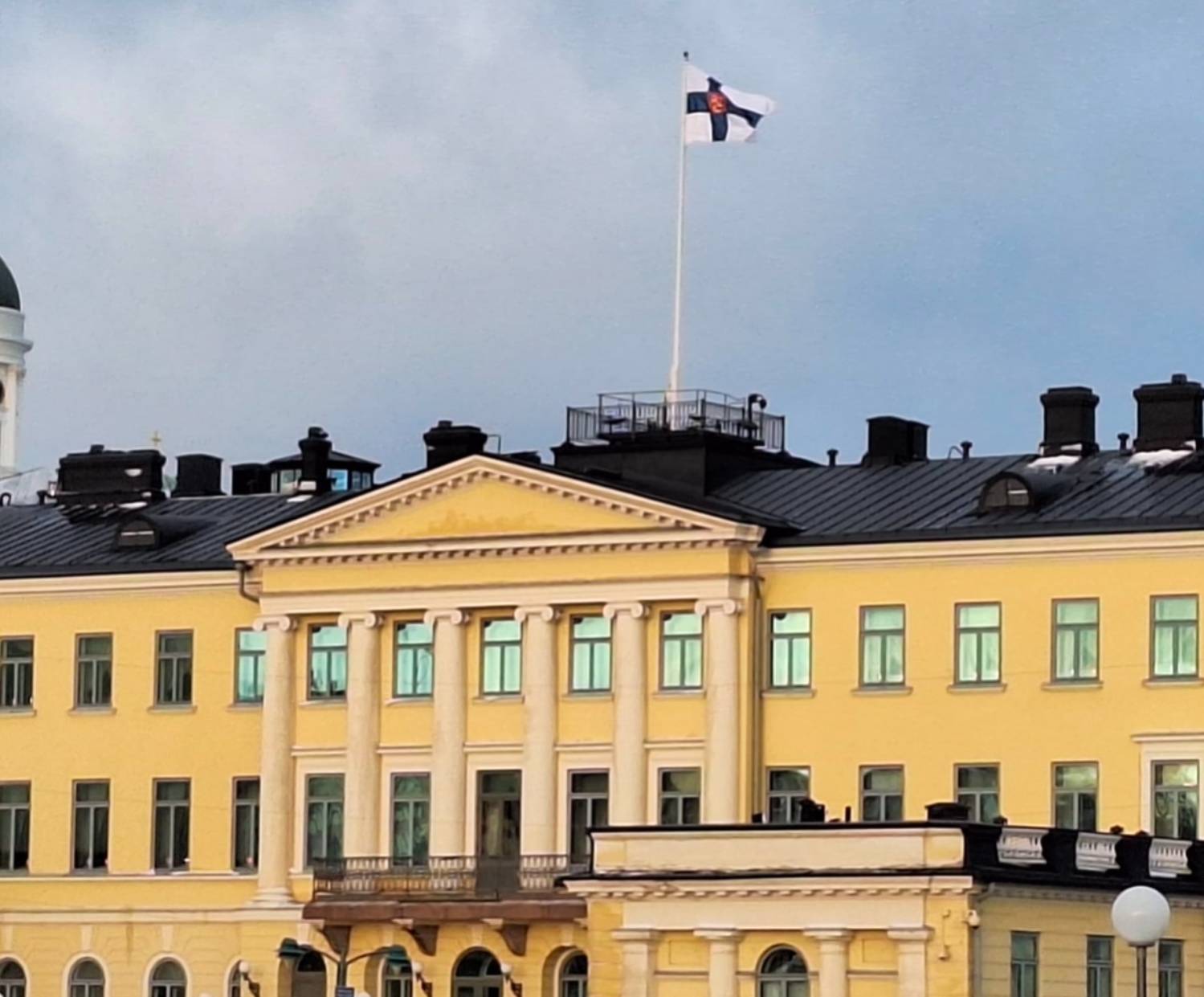
Finland, the Happiest Country in the World
“The worst part wasn’t even what I had to experience myself, or the violence directed to-wards me. That wasn’t the most painful part. The most painful part was witnessing it firsthand.”
“When we knew my mother’s partner was coming home, I would usually take my little brother with me and we’d hide in the basement, or we’d hide outside or just escape the sit-uation of someone coming who would most likely hurt either us or mom”.”
“There was a certain kind of caution because you could never know what could set my fa-ther off on that specific day. Occasionally everything would be calm, pleasant and nice. But when he had a bad day, there was no telling what would happen, or when.”

These are excerpts from the just-released documentary film Life at the Ringside by the Finnish Institute for Health and Welfare (THL) and director Iris Olsson featuring five peo-ple who share their experiences of growing up in violent homes and how the trauma shaped their lives. “With this documentary, we hope to bring a more peaceful Christmas to Finnish families,” explains Sini Stolt, Chief Specialist at THL. “ Many families struggle with violence during the holidays, and we wanted to raise awareness about the impact of violence on children and to encourage parents to seek help,” she explains.
According to the World Happiness Report, six variables contribute to human happiness: living standard, social support, healthy life expectancy, freedom to make life choices, generosity and perceptions of internal and external corruption levels. Finland is at the top of the list every year.
Renowned for its stunning Arctic landscapes, the northern lights, its many lakes, forests and overall natural beauty, Finland borders Norway, Sweden and Russia while approxi-mately one third of its territory lies within the Arctic Circle. Considered one of the world’s most progressive and gender-equal nations, Finland prides itself on its low levels of in-come inequality and a strong social welfare system that includes public healthcare, af-fordable housing and childcare, and generous welfare services. High quality education is subsidised by the government; public services function well; crime is virtually nonexist-ent; the work-life balance is respected and self-sufficiency is highly valued. In Finland everything functions smoothly.
Finland has one of the highest representations of women in politics in the EU: 47% of the Members of Parliament and around 60% of government ministers are women. “In many ways, Finland is a very equal country and a good place to live. However, it is true that domestic violence is our dark spot. Women still face far too much violence in relation-ships, including lethal violence,” confirms Stolt.

“Domestic violence is a very real problem in Finland, especially outside the capital city. Finns seem very restrained and you rarely see outbursts of anger on the street. But that doesn’t mean that they behave the same way behind closed doors,” confirms Janne from Helsinki.
“This is not a society that believes in sharing feelings. You don’t talk to someone without a concrete reason because you are putting a lot of weight on others by burdening them with your problems. You just deal with it and you don’t complain. It is what it is,” explains Alessandro Rampazzo, an independent photojournalist from Italy who has been living in Helsinki for nine years and has covered many social issues, including domestic violence.
“In Finland, you have Helsinki and you have sparsely-populated villages where people live solitary lives. There is a lot of space and only 5.5 million people, like the city of Milan in a space as big as all of Italy. It is way more civilised and less stressful than the Mediter-ranean and Balkan cultures. For me, as an Italian, the weather and the food are tough. You can’t find a good espresso here and the social life is dictated by the weather.” During the long winter darkness people spend a lot of time in their homes. “It’s a much more soli-tary culture. There is a well-known Finnish word, kalsarikanni, which literally means ‘get-ting drunk at home in your underwear with no intention of going out.”
“Sometimes people attribute the darkness or alcohol to the high rates of domestic vio-lence, but those are not causes. As a foreigner in Finland, I see a society that is unable to talk about anything without feeling shame. The average Finn has no tools to process feelings because being self-sufficient is highly valued, while vulnerability is shameful and not shared with others.”

The concept of self-sufficiency can be attributed to the Finnish word sisu, which is loose-ly defined as determination, inner strength, the ability to face challenges and is part of the Finnish understanding that life is full of obstacles to overcome, rather than an unrealistic view of “happiness.” One popular challenge is avanto, the 300 year old tradition of swim-ming in ice holes in sub zero temperatures. “The weather also contributes to this feeling that things exist that are bigger than you when you’re faced with darkness, snowstorms and temperatures of -20 degrees,” says Alessandro. “Finns have a survival mentality be-cause they’ve been forced to be self-sufficient for centuries and centuries. You don’t ex-pect any acts of kindness from people here because you are meant to be able to stand on your own two feet in every situation, and this applies equally to both men and women. It’s a very gender-equal society, even the language is gender-neutral. No one cares if you’re male or female, you just have to deal with your problems. In Italy talking about things helps us cope, but Finns keep everything inside and at one point it has to boil over.”
Alessandro adds that alcohol consumption contributes to domestic violence in Finland. “Men and women both get British-level drunk here, which is also very different from Ital-ian culture where we drink because we enjoy it. In Finland the purpose is to get complete-ly smashed. The drinking, the pressure to be self-reliant, a lot of time spent at home, and the inability to deal with feelings that have piled up leads to heated arguments which cause some men to lose their ability to control themselves and become violent,” he ex-plains. “They don’t have the social structure to do differently.”

“Getting drunk is a coping mechanism, and it is the same in all the northern countries: Iceland, Sweden, Norway, Russia, Alaska, and there are two main reasons for this- geo-graphic location and climate,” says Janne. “It starts to snow between mid-November and mid-December until early May. All the way up north, in Rovaniemi on the Arctic Circle it starts snowing in October. In winter, the sun stays above the horizon in Helsinki from 9.30 until 15.30. The combination of all-pervasive cold and the desolate darkness affect the psyche in a disastrous manner, so people get drunk.”
According to a recent report from THL, “in 2023, 77% of the occasions in which alcohol was consumed were in home environments, where children are often exposed to the al-cohol use of their parents. Excessive alcohol consumption often increases and exacer-bates domestic violence and other problems in close relationships.”
Research by Statistics Finland indicates that there were 12,300 domestic violence of-fences reported to the authorities in 2023, and 2,900 cases of violence directed at chil-dren by their parents. Since only one in ten women, on average, report instances of abuse, the statistics are not reliable.. “Shame, and the thought of how one ended up in such a situation, often prevents women from seeking help. Additionally, the cyclical na-ture of violence, where there are also good moments in the relationship, plays a role, too,” explains Stolt.
It has been widely documented that children who are victims or witnesses of domestic violence suffer from psychological problems such as anxiety, depression, post-traumatic stress disorder (PTSD), violent behaviour, insomnia and difficulty concentrating. Re-search has also shown that children who live in an abusive environment are at a higher risk of being abused themselves. “Intergenerational experiences play a big role in our country. Violence in one’s childhood family may continue in one’s adult family.,” confirms Stolt.
Voices from the film Life at the Ringside:
“I’m really angry, but I’m not even sure at what exactly because it’s such a huge mess. But I’m really angry, bitter and cynical. I don’t want to be.”
“I’ve never been able to fully trust anyone. When your experience is that even the safest person in your life can suddenly turn into a complete monster, or the person you depend on might suddenly become the one you need to protect yourself or your loved ones from.”
Recognising the need for a child-friendly approach towards children, Barnahus was de-veloped as a multidisciplinary model for the coordination of criminal and child welfare in-vestigations in cases of violence against children. As defined by the Council of Europe, this model brings together under one roof the judge, the prosecutor, the police, social workers, psychologists and forensic doctors with the purpose of providing children with support, protection and access to justice. Originally developed by the National Children’s Advocacy Centre in the United States, the model was first adapted to the European con-text by Iceland in 1998. As of April 2024, the Barnahus Network has 27 member coun-tries. There are five Barnahus units spread across five university hospitals in Finland.

“Taking care of the child’s physical and psychological safety at every stage of the investi-gation is essential. When there is suspicion of violence, Child Welfare Services investi-gates the child’s need for protection, while the police handles the alleged offences. In family violence cases, social welfare authorities meet with the child and investigate the child’s experiences in an age-appropriate manner,” explains Stolt.
She adds that it is essential to acknowledge that different forms of violence frequently overlap. “In addition to physical violence, the child may be exposed to violence between the parents. If the child appears to be unsafe, Child Welfare Services remains with the child to ensure safety and the end of all forms of violence.” The Barnahus model en-sures that children have access to both legal and psychological support. “Various ser-vices are in place to support the recovery of the child or adolescent such as creating safe-ty and stability and teaching coping mechanisms,” she says.
“In cases of parental separation due to violence, the likely outcome is that fathers don’t have much contact with children,” says Alessandro. “Children here start living alone at sixteen or seventeen because the welfare state allows them to become independent at a young age, so the relationship between parents and children is different from the Mediter-ranean countries.”
In Finland, there are numerous support systems geared towards both adult victims and children who are victims or witnesses of domestic violence. Organised by THL and fund-ed by the Ministry of Justice, Nollalinja is a nationwide helpline and chat service for any-one who has experienced violence. Staffed by professionals, the helpline operates anonymously around the clock and free of charge in Finnish, Swedish and English and provides assistance, advice and information on available shelter places. More than 15,000 calls were made to Nollalinja in 2023.
There are 29 government-funded shelter services that are staffed 24 hours a day in Fin-land with 230 available family places. Available to anyone suffering from domestic vio-lence, the shelters are accessible by all ages and genders without referrals and free of charge. Victims are given rooms of their own, food, toiletries, psychosocial support, coun-selling on legal issues, practical matters and crisis assistance. The majority of clients are women between the ages of 25 and 34 accompanied by a baby or small child who remain in the shelter for approximately two weeks. “ A child under 18 must be accompanied by a non-violent adult, and a family can stay at the shelter as long as needed,” explains Stolt, who helped establish the Hameenlinna Shelter around five years ago. “All the children are given a teddy bear on arrival and are welcome to take it home with them,” she says.

According to THL, a total of 5,364 clients used shelter services in 2023, 59% adults and 41% were children. Of the adults, 90% were female and 10% were male. 1,277 clients were directed to alternate safe places due to a lack of space. Because the majority of vio-lence-prevention services are state-funded, there is growing concern for the future. “Funding for shelter services has actually been increased and there is a national desire to further develop and expand these services. The budget cuts have impacted organisa-tions that are important partners for shelters,” confirmed a specialist at THL.
According to information released by the Ministry of Social Affairs and Health on Decem-ber 19, 2024, the practice of mediation in domestic violence cases will be discontinued from 2025. “Violence taking place within the home is not a matter to be kept private. Do-mestic violence can kill, and it is alarmingly common in Finland. This long-awaited legis-lative amendment will strengthen the status of victims while sending a strong message: violence cannot be mediated and the offender must be punished,” stated the Minister of Social Security, Sanni Grahn-Laasonen.
“Although many countries can point to gender inequality as one of the root causes of domestic violence, Finland has no need for gender equality experts to explain the need for a gender-neutral vocabulary. The Finnish Parliament has been referred to as a “pio-neer in gender equality” and Finland is a prime example of equal treatment for all citi-zens, In this Nordic paradox, the fight against domestic violence becomes a complicated matter.
While changing the deeply-rooted mentality of self-sufficiency is difficult, raising aware-ness through legislation, documentary films, real-life stories and educational campaigns about mental health and the effects of violence can contribute to reducing domestic vio-lence in Finland. Educating individuals about recognising signs of abuse and seeking support would strengthen the system of prevention, challenge stereotypes and promote long-term social change among younger generations.